
Many hikers step from dirt, stone, or packed trail onto wooden bridges and boardwalks without slowing down at all. Most of the time, that feels natural. The crossing looks simple, flat, and sturdy. Still, wood often behaves differently from the ground around it. A surface that appears easy to walk on can feel smoother, slicker, or less forgiving the moment a boot lands on it.
Outdoor safety educators often explain that trail accidents are more likely to happen during small transitions than dramatic obstacles. Boardwalk safety specialists also note that hikers usually do better when they slow slightly before stepping onto wooden bridges and boardwalks instead of assuming the next surface will feel exactly like the last one. That small pace change often makes the entire crossing feel steadier.
Why wooden bridges and boardwalks deserve a small pace adjustment
One reason wooden bridges and boardwalks deserve more attention is that traction can change quickly. Packed soil usually gives a different kind of grip than wood. Even when a bridge looks dry and clean, the surface may still feel smoother underfoot than the trail just before it. That difference often matters most during the first step or two.
Outdoor instructors often explain that hikers do not need to become overly cautious. They usually just need to recognize that the walking surface has changed enough to call for a calmer step. Slowing slightly gives the body time to sense the new traction before returning to a normal pace.
How trail traction changes happen faster than hikers expect
Trail traction can change more suddenly than the trail’s appearance suggests. A hiker may see the bridge ahead clearly and still underestimate how different it will feel. Dirt, rock, leaf cover, and wooden planks all interact with boots in different ways. When the body expects the same grip to continue, the first step onto wood can feel less stable than expected.
Movement specialists often note that the feet usually notice this difference before the hiker has time to think about it. That is one reason wooden bridges and boardwalks can catch people off guard. The change may look minor, but it feels immediate.
Why wood can feel slick even when it does not look wet
Many hikers connect slippery surfaces only with obvious moisture. Wood, however, can feel slick for several other reasons. Smooth wear, thin dust, fine sand, leaf fragments, or light morning dampness can all reduce grip without making the surface look clearly unsafe. Boardwalk safety depends on respecting what the surface might do, not just what it appears to show from a distance.
Outdoor guides often explain that wood does not have to be soaked to behave differently from soil or stone. A hiker who slows slightly before stepping onto wooden bridges and boardwalks often notices that difference early enough to stay steady and smooth.
How bridge entries often create the most awkward steps
The entrance to a bridge or boardwalk is often where the biggest footing change happens. One foot may still be on natural trail while the other is landing on wood. That split in surface feel can make the transition more awkward than the bridge itself. Once both feet are fully on the new surface, many hikers adjust quickly. The first step is often the one that matters most.
Trail safety specialists often explain that this is why slowing before the bridge works better than reacting after stepping onto it. A calmer entry usually keeps the body more centered and reduces the chance of one rushed or overly confident landing.
Why narrow wooden crossings need even more control
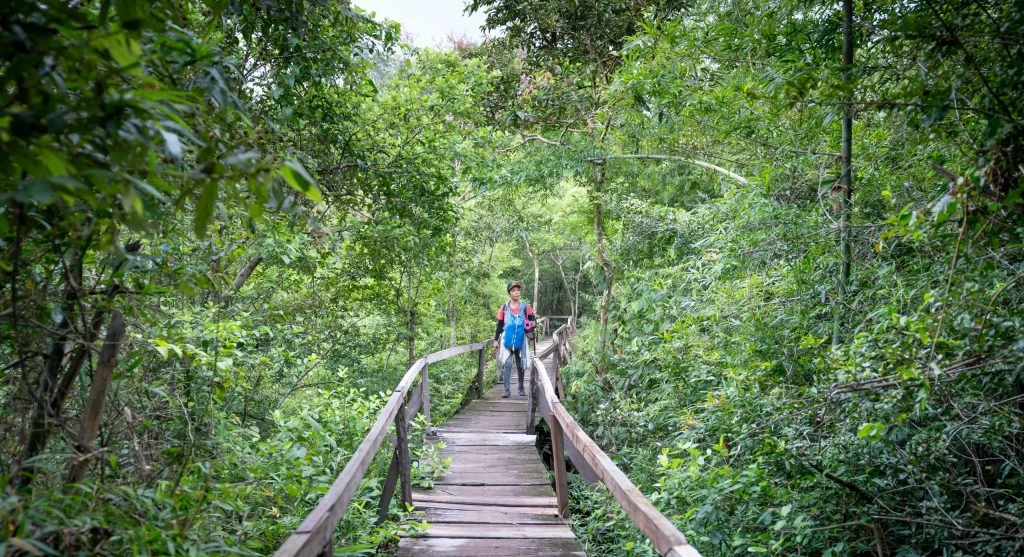
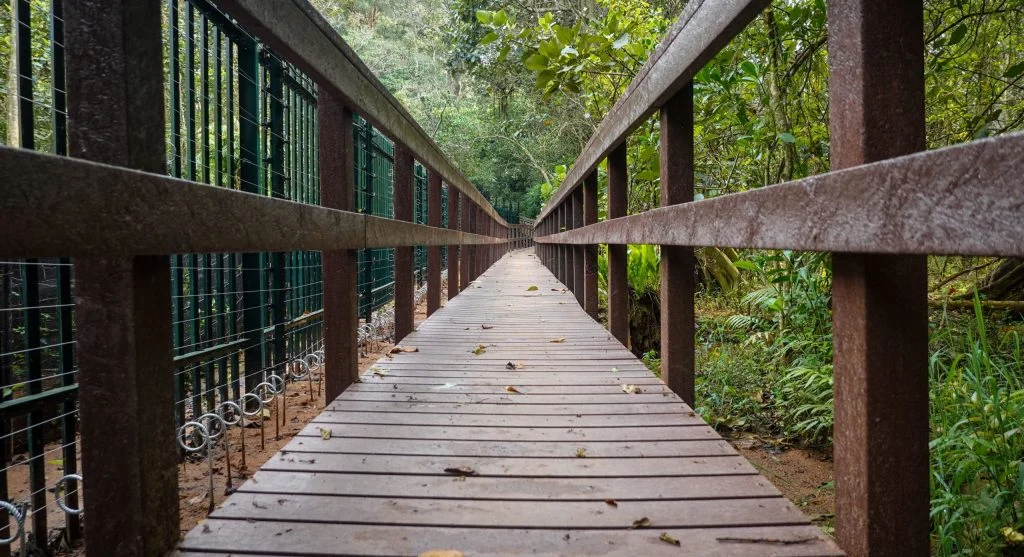
Some wooden bridges and boardwalks are wide and stable. Others are narrow, raised, or bordered by railings that subtly change how hikers move. A narrow crossing often makes people more aware of where they place their feet, which can improve safety when the pace already matches the structure. Problems usually happen when hikers carry normal trail speed onto a surface that requires more precise steps.
Outdoor educators often note that narrow crossings do not need to feel dangerous to deserve respect. A small pace change often gives hikers the added control they need without making the crossing feel tense or difficult.
How wet leaves and mud at the edge make the transition harder
Another reason hikers should slow slightly before stepping onto wooden bridges and boardwalks is that the entry area can be messy. Mud, wet leaves, or soft ground may gather at the start of the planks. That means the hiker is not only moving onto wood but may also be bringing moisture or debris onto the boot at the same time. This combination can reduce grip more than the bridge surface alone.
Outdoor trail workers often explain that the edges of structures tend to hold the most mixed conditions. A careful step here often matters more than anything that happens in the middle of the crossing.
Why descents make boardwalks and bridges feel less forgiving
A wooden crossing entered from a downhill section often feels different from one reached on level ground. The body is already controlling momentum, so even a modest change in traction can become more noticeable. Hikers moving onto wooden bridges and boardwalks from a descent usually do better when they let their pace settle before the transition instead of carrying downhill speed straight onto the planks.
Movement educators often explain that this is one of the most common places where a small slide can happen. The issue is not only the wood. It is the shift from braking on trail ground to landing on a surface with a different feel.
How hikers can cross more smoothly without overthinking it
The best response is usually simple. Shorten the step a little, keep posture centered, and let the first foot test the surface before continuing normally. This does not need to become a long pause or a full stop. It is usually just a brief moment of better pacing and sharper attention.
Outdoor instructors often recommend treating each crossing as a quick surface change, not a major obstacle. That keeps the response calm and practical. Hikers usually feel more stable when they acknowledge the difference without turning it into something dramatic.
Why this small habit often prevents bigger awkward moments
Many hiking safety habits work because they stop small problems from becoming larger ones. Slowing before a wooden crossing is one of those habits. A small pace adjustment can help prevent slipping, awkward balance recovery, or the need for a sudden correction in front of other trail users. The crossing then feels natural, quiet, and uneventful, which is usu+ally the best outcome.
Outdoor coaches often explain that strong trail awareness often shows up in simple places. A hiker who respects small surface changes early usually moves more smoothly everywhere else too. Wooden bridges and boardwalks are one of the clearest places where that habit pays off.
Frequently Asked Questions
Q: Why should hikers slow down before stepping onto a wooden bridge?
A: Because wood often has different traction than dirt or rock. A slight slowdown helps hikers feel that change before full pace continues.
Q: Are wooden bridges only risky when they are wet?
A: No. Smooth wear, dust, leaves, or light dampness can also reduce grip even when the surface does not look obviously wet.
Q: What part of the crossing matters most?
A: The entrance often matters most because the hiker is changing surfaces from trail ground to wood in a single step.
Q: Do hikers need to stop completely before every boardwalk?
A: Usually no. A small pace adjustment and a more controlled first step are often enough to make the crossing feel much steadier.
Key Takeaway
Wooden bridges and boardwalks often deserve a small pace adjustment because trail traction can change faster than hikers expect. The first step onto wood is often the moment when balance and footing need the most control. Slowing slightly before the transition usually keeps the whole crossing smoother, safer, and easier to manage.