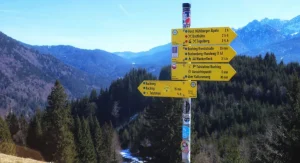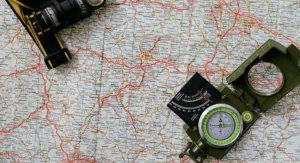

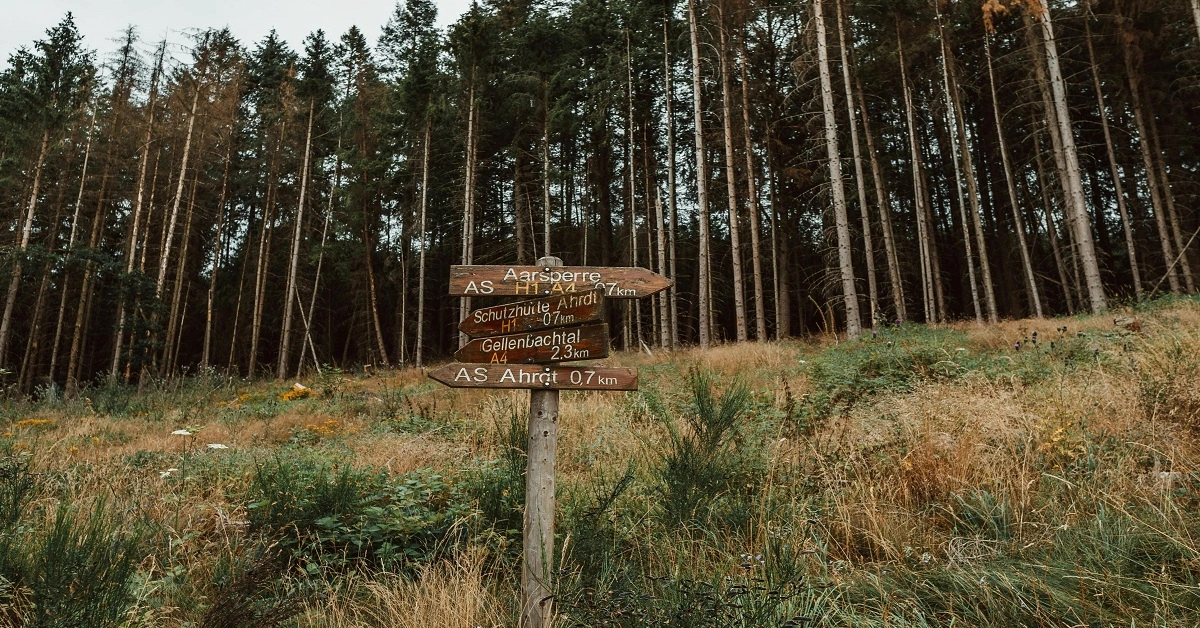
When you’re walking in the countryside, looking at the trail signs and markers keeps you from getting lost and taking routes you don’t need to. Though lots of trails have pretty obvious indicators, you can still get turned around if you’re hurrying or if you expect all signs to be the same. Knowing what the signs mean will make you more sure of yourself, and you’ll get your directions wrong less often.
People who teach how to find your way in the outdoors will say that the most important thing about navigating a trail is looking for repeating styles, not trying to remember what every symbol represents. And park rangers say most marked trails use a fairly uniform approach, but there will be slight variations based on where you are.
Why reading trail signs and markings starts with simple awareness
You’ll start understanding trail signs and blazes by looking for them soon! They’re generally where trails begin, trails cross each other, or you have to choose which way to go. If you start to be aware of signs before you get to these places, you’ll have time to figure out where you are heading.
People who teach outdoors frequently say to take it easy as you approach where trails split. That way you can properly read what the sign says, instead of trying to understand it at the very last second.
How color-coded trail markers guide direction
Most hiking trails use colors on trees, rocks, and posts to show you which path to take. If you pick a color at the start of a trail and stick with it, the signs and markers will make more sense. Experts in finding your way around say you’ll likely end up on a different trail if you don’t realize when the color has changed. Essentially, keeping to one color in the markings will help you go the way you intend.
Why symbols and shapes matter on hiking signs
Trail markers show the way with things like arrows, little pictures, or the path’s number; these details make it easier to know where to go and where you’ll end up. What a hiking sign actually means is usually a combination of the picture on it, and where on the trail you find it.
Parks people usually opt for easy-to-understand, familiar shapes to avoid messing you up. Knowing what these symbols mean will make finding your way around much better, particularly at places where trails cross.

Credit: Simon Berger / Pexels
How to interpret distance and direction on signs
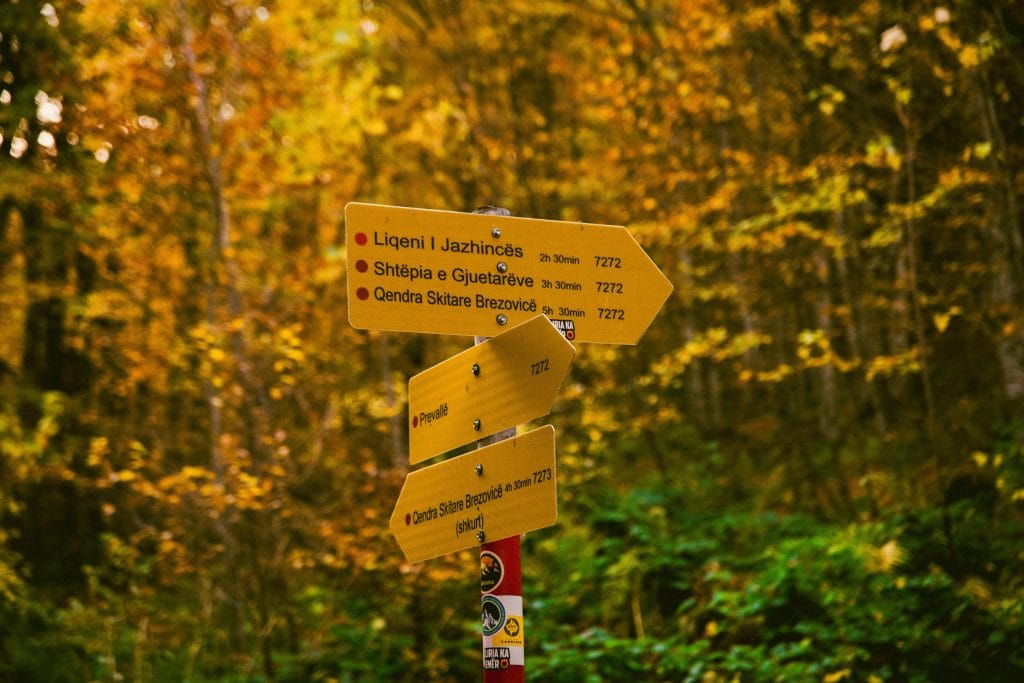
Trail signs frequently tell you how far along the trail you are, and usually give this in kilometers or miles. They’ll also show roughly how long it’s going to take. When you’re looking at signs and blazes (or other markings) on the trail, you need to remember those time estimates aren’t set in stone, because how fast you go and what the weather is like will change them.
In fact, outdoor leaders commonly say to think of the estimated times as a broad idea of how long it’ll be, not as a specific prediction.
Why intersections require extra attention
You get lost on a trail most often at places where trails cross. Lots of signs, different paths, and trail markers are all in the same spot at these intersections. Because of this, people learning to find their way on trails are generally told to stop at intersections and make sure they’re going the right way.
Park rangers have said over and over that a lot of hikers end up on the incorrect trail just because they don’t bother to look at the signs carefully and keep walking.
How consistent markers help maintain direction
It’s pretty common to see trail markers over and over again shortly after you go past where trails split. They’re there to show you’re still on the right route. So, when you’re following signs and blazes on the trail, get into the habit of looking for these “you’re going the right way” signals all the time.
People who teach navigation say you should find the next marker in the distance before going too much further. That way you’ll realise if you’ve gone wrong quickly.
Why missing signs can still be managed
It’s not unusual for trail signs to be hard to understand, or to be quite a distance from each other. When this happens while you’re hiking, you can get your bearings by remembering the general sense of the trail and where you were heading before. Trail markers are good to have, but knowing how the trail is put together – its overall layout – is important too.
And if you get turned around, people who spend a lot of time outside generally say to not panic, and go back over the last little bit of your path; this fixes most problems with finding your way.
How to combine signs with basic route knowledge
It’s easiest to use trail signs and markings if you have a basic sense of where you’re going. Specifically, if you know the trail either returns to the start (a loop) or you return the way you came (out-and-back), that helps you be sure of your choice when trails split.
Outdoor leaders frequently say to go over the path you’ll take beforehand. This builds a picture in your head which will then help you find your way as you’re actually on the trail.
Credit: Furkan Idrizi / Pexels
Frequently Asked Questions
Q: What do trail marker colors mean?
A: Colors usually represent specific routes. Following one consistent color helps maintain direction on the trail.
Q: Why do hikers miss trail signs?
A: Signs are often missed when hikers move too quickly or do not pause at intersections.
Q: Are trail signs always accurate?
A: Signs are generally reliable, but conditions and spacing can vary, so awareness is still important.
Q: What should hikers do if they feel unsure about direction?
A: Slowing down, checking the last marker, and retracing steps slightly can help confirm the correct path.
Key Takeaway
When you’re hiking, understanding the colors, symbols, and where trail signs are (especially at important spots) will keep you on the path. If you look carefully at where trails meet and check the direction with signs that show up again and again, you’ll get lost less often. Knowing the route a little bit, plus using the trail signs, will make you find your way around with more certainty and get you to where you’re going correctly.
[INTERNAL LINKING SUGGESTIONS]
- How to Plan a Day Hike Route Without Getting Lost
- Simple Hiking Safety Tips for Beginners
- Common Hiking Mistakes Beginners Make on Easy Trails