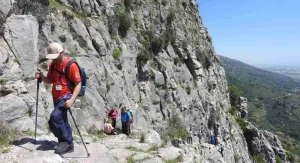


Outdoor educators often explain that hiking energy is shaped not only by difficulty level but also by how often the body has to interrupt itself. Movement specialists also note that repeated trail effort often feels more draining than one clear hard section because the body never gets enough time to fully settle into a smooth pattern. This is why hikers often feel more tired on trails with constant small obstacles than on routes with one big challenge they could prepare for clearly.
Why small repeated obstacles feel so tiring
One reason these trails feel tiring is that the body treats every small obstacle as a new task. A single rock or root may not matter much, but a trail full of them keeps turning walking into a long sequence of adjustments. Instead of moving steadily, the body keeps shifting, checking, lifting, and correcting.
Outdoor instructors often explain that people usually pace well when a challenge is obvious. A steep hill invites slower movement and realistic effort from the start. A trail with many minor obstacles often looks manageable enough that hikers do not give it the same respect early. The energy loss then arrives gradually rather than dramatically.
How trail rhythm breaks drain energy
Trail rhythm breaks are one of the biggest reasons these routes feel more tiring than they first appear. Good rhythm helps the body save effort. When stride, breathing, and attention begin working together, hiking usually feels smoother and more efficient. Small obstacles break that rhythm again and again.
A hiker may step up, slow slightly, rebalance, then try to return to normal movement. A few seconds later, the next interruption appears. The result is not always obvious in one moment, but over time the body feels as though it never got a long enough stretch of truly easy walking.
Why one clear challenge can sometimes feel easier
One big challenge can sometimes feel easier because it gives the hiker a clear plan. The body knows the route is about to ask for something harder, so pace, breathing, and expectations adjust. A long climb may be tiring, but it is also predictable. That predictability often helps hikers move more honestly and efficiently than they do on trails that keep hiding effort inside many smaller interruptions.
Outdoor coaches often note that predictable difficulty usually feels more manageable than scattered difficulty. When the body can commit to one steady pattern, energy use often feels more logical. Constant interruptions remove that advantage.

How constant attention creates hidden fatigue
Trails with many small obstacles often feel mentally tiring as well as physically tiring. The hiker has to keep noticing the next landing, the next root, the next rough patch, and the next small correction. None of these moments feels like a major decision, but the mind still keeps working. That constant background attention often makes the trail feel less restful and more draining over time.
Outdoor psychologists often explain that mental effort changes how physical effort feels. A route that keeps asking for many little choices often seems longer and heavier than a route that offers one hard section followed by smoother travel.
Why pace mistakes happen more easily on these trails
These trails often lead to pace mistakes because the route never looks dramatic enough to slow down for properly. A hiker may keep moving as though the trail is moderate and easy enough, even while small interruptions are already raising the cost of every minute. Later, the body begins feeling more tired than expected, and the trail seems harder than the map or the first section suggested.
Fitness specialists often note that this pattern is common on trails that look ordinary on paper. The mileage may seem reasonable, the elevation may not look extreme, and the route may still feel surprisingly tiring simply because the body never had enough continuous easy movement.
How repeated small lifts and landings add up
Small obstacles often create constant lifting and landing work. A little step-up, then a little drop, then another careful landing over a root or onto a stone. Each one asks the legs to do more than regular flat walking. The body must keep controlling momentum rather than simply rolling forward naturally.
Movement educators often explain that many tiring trails are not tiring because they are steep. They are tiring because they require too many little movements that break normal walking mechanics. Over miles, those small lifts and landings often matter a great deal.
Why these trails feel worse later in the day
Early in the hike, the body can often absorb repeated minor obstacles fairly well. Later, the same trail starts feeling far more demanding. Small corrections become slower, landings feel heavier, and patience drops. This happens because the body has already spent a long time doing the hidden work these obstacles required.
Outdoor instructors often explain that late fatigue often reveals the real cost of the route. The obstacles did not suddenly become larger. The body simply reached a point where it could no longer hide what those interruptions had been taking all along.
How weather and footing make the problem bigger
Weather and surface conditions can make constant small obstacles even more tiring. Heat reduces comfort and patience. Dampness changes traction. Dust makes small landings feel less clean. Wind on exposed sections increases effort between obstacles too. When these conditions combine with repeated small trail interruptions, the whole hike often feels more difficult than hikers expected from the route description alone.
Outdoor guides often explain that moderate obstacles under harder conditions often feel like major work. The trail may still be officially moderate, but the body is now handling those repeated interruptions with less support.
Why smoother sections feel so important on these hikes
On trails filled with constant small obstacles, even a short smoother stretch can feel like a major relief. That is usually a sign that the route had been asking for more than it seemed. When hikers suddenly feel better on a calm stretch, the difference often shows how much energy the earlier constant interruptions had been quietly draining.
Outdoor coaches often recommend paying attention to these moments. If a few minutes of smoother ground feels unusually refreshing, that often means the previous section was more demanding than it first appeared.
How hikers can manage these trails better
Most useful changes are simple. Hikers often do better by slowing a little earlier, using shorter steadier steps, and accepting that the trail is not asking for speed. It also helps to treat many small obstacles as one real challenge pattern instead of as a random collection of unimportant details.
Once hikers understand that the route is expensive because of repetition, they often pace more honestly and feel less surprised later when fatigue starts building. The trail becomes easier to understand even if it does not become easier to walk.
Why understanding this improves trail planning
Many hikers plan mainly around mileage and elevation, but routes with constant small obstacles often deserve extra respect even when those numbers look moderate. A shorter trail with repeated interruptions may feel harder than a longer route with steadier movement. Recognizing that helps hikers choose better, time better, and protect energy more effectively.
Outdoor educators often explain that strong trail planning means asking not only how hard the biggest obstacle is, but also how often the trail interrupts smooth movement. That one question often reveals much more about real hiking effort than people expect.
Frequently Asked Questions
Q: Why can many small obstacles feel more tiring than one big challenge?
A: Because repeated interruptions keep breaking rhythm, attention, and movement efficiency, which often drains more energy over time than one obvious hard section.
Q: What kinds of small obstacles cause this problem?
A: Roots, small rocks, uneven steps, loose patches, narrow sections, and short repeated lifts or drops often create this tiring pattern.
Q: Why do hikers often underestimate these trails?
A: Because no single part looks serious enough to demand much respect, so the body keeps spending energy on many small adjustments before the cost becomes obvious.
Q: What helps most on trails like this?
A: Many hikers do better with a calmer pace, shorter steps, and the understanding that repeated minor interruptions are the real challenge of the route.
Key Takeaway
Hikers often feel more tired on trails with constant small obstacles because repeated interruptions quietly drain rhythm, focus, and energy in ways one clear challenge often does not. The route may never look dramatic, but it keeps asking the body to correct itself again and again. When hikers respect that early, the whole trail becomes much easier to pace and understand.