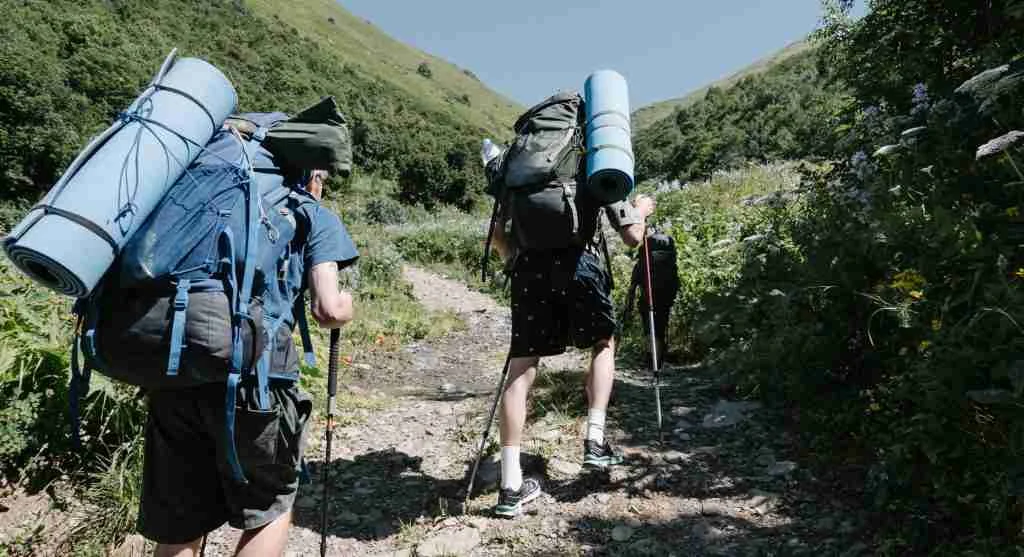

Matching footwear to trail conditions often matters more than hikers expect. Many people choose shoes based mostly on distance, but a short hike over loose rock or wet ground can feel more demanding than a longer walk on smooth dirt. The right footwear plays a key role in maintaining comfort, balance, and confidence throughout the day.
Outdoor educators often explain that hiking shoe choice should reflect how the trail behaves underfoot, not just how far it goes. Trail crews and safety specialists also point out that surface changes, weather, and elevation all influence what kind of grip and support will feel most useful on a given hike.
Why matching footwear to trail conditions starts with the surface
A helpful starting point isn’t always “How many miles is this hike?” but rather “What will the ground feel like?” Matching footwear to trail conditions begins with understanding whether the route is packed dirt, mud, gravel, rock, roots, sand, or a mix of surfaces.
Outdoor safety trainers often note that surface type directly affects the kind of control a hiker needs. Smooth dirt may suit lighter, more flexible shoes, while loose or uneven terrain often calls for stronger grip and added support. In many cases, the surface has a greater impact on comfort than distance alone.
How rocky trails change hiking shoe choice
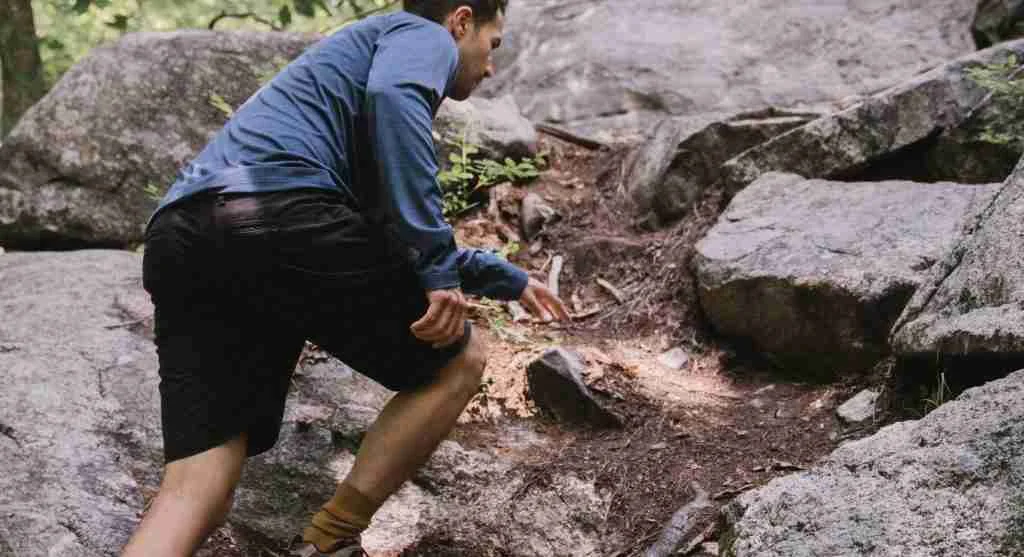
Rocky terrain can challenge both traction and foot comfort. Constant contact with hard, uneven ground can lead to fatigue more quickly, especially if the footwear feels too soft or unstable. Matching footwear to trail conditions on rocky routes often means paying close attention to sole grip and how well the shoe handles uneven pressure.
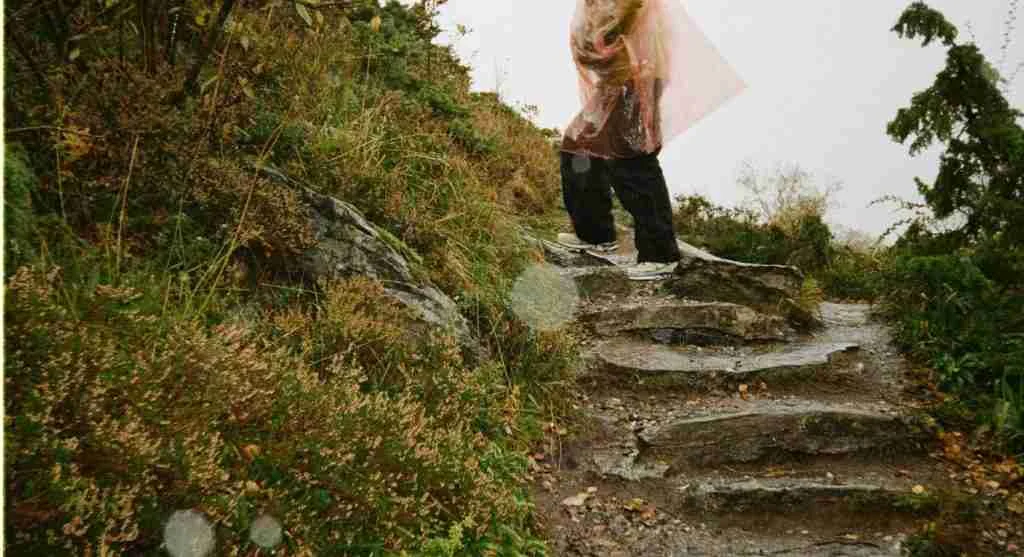
Movement specialists often point out that rocky trails require the foot to adapt continuously. A shoe that feels fine on flat ground may feel much less secure when navigating angled stones, small ledges, or repeated rock steps. Over time, that difference becomes more noticeable.
Why wet ground and mud require better trail grip
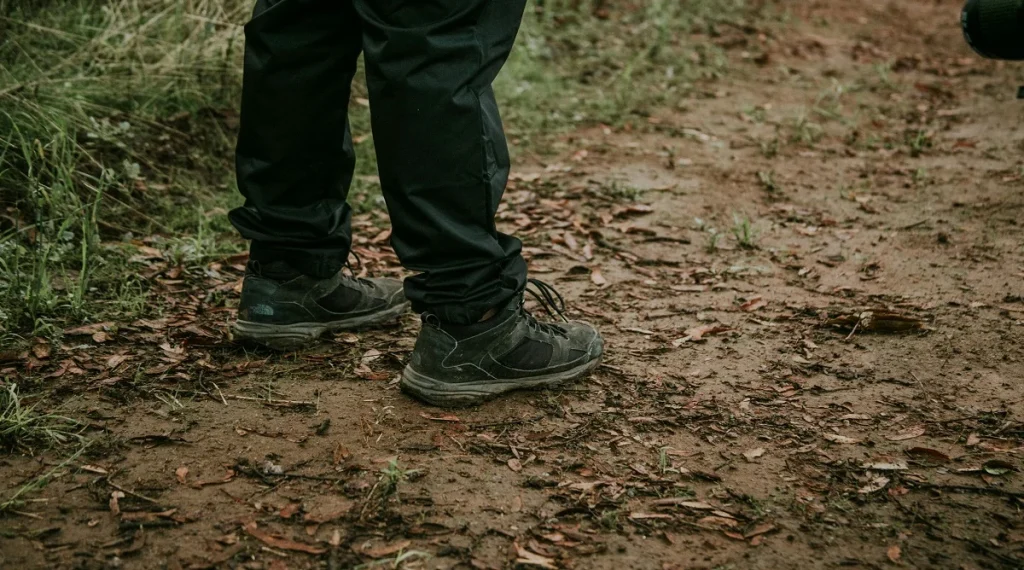
Wet conditions can change a hike more than expected. Mud, slick roots, damp rocks, and wet leaf cover all reduce traction. Matching footwear to trail conditions becomes especially important when recent rain or shaded areas keep the ground slippery even after the weather seems clear.
Outdoor instructors often suggest thinking about how a shoe performs when the trail becomes unpredictable. Reliable traction matters most when each step isn’t guaranteed to be stable. Hikers usually feel more at ease when their footwear allows for small adjustments without the risk of sudden slipping.
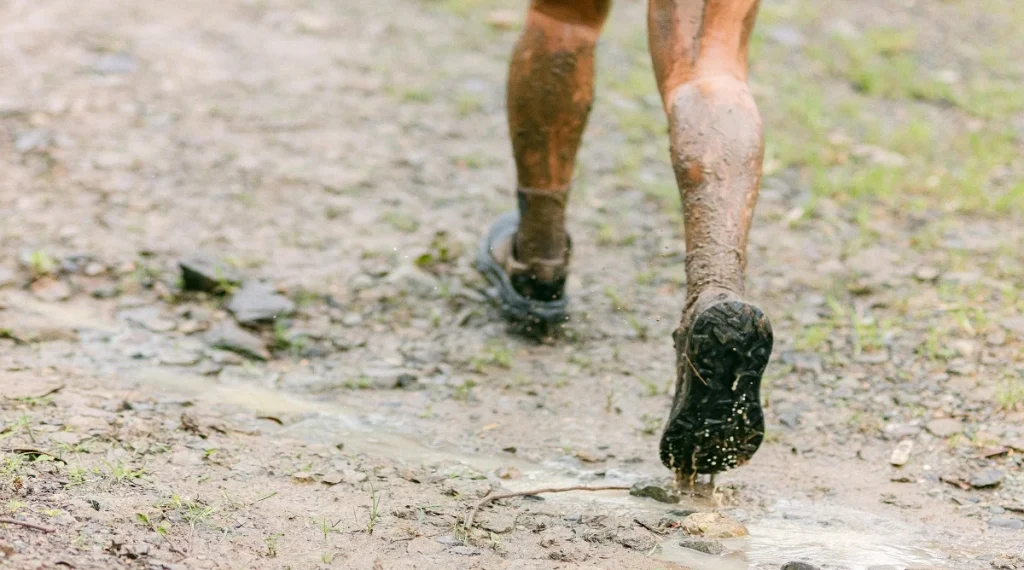
Credit: Ilarawan Photography / Pexels
How dry loose trails affect hiking footwear comfort
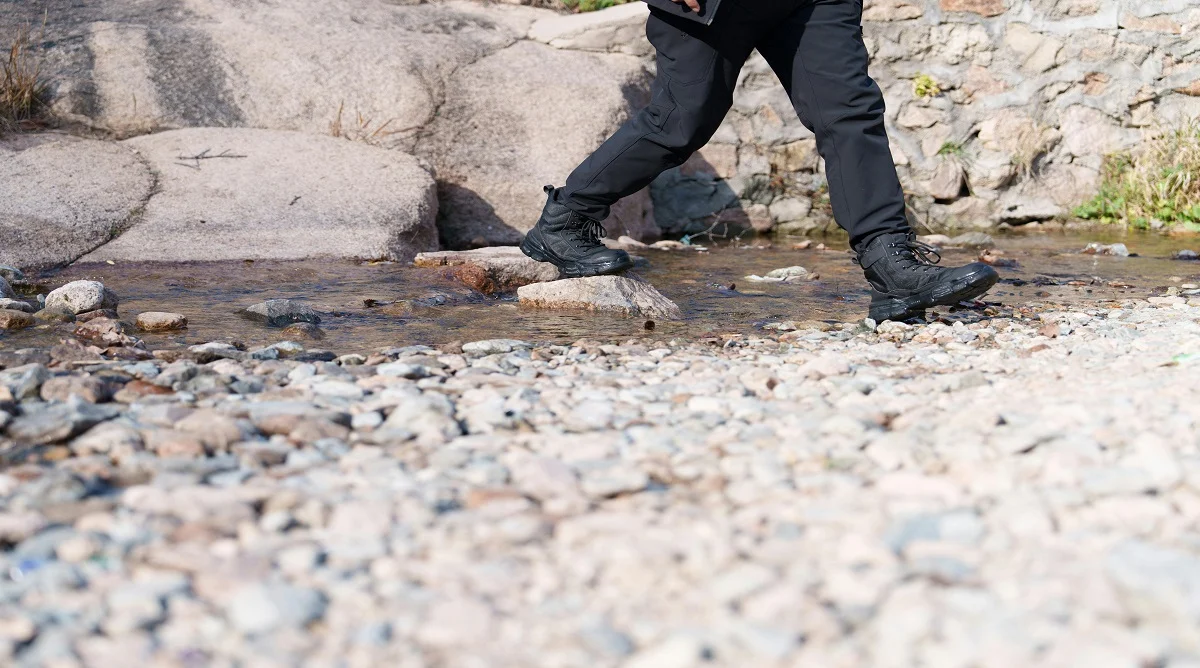
Dry trails aren’t always easy. Dust, loose gravel, and sandy sections can reduce stability in a different way than mud. Instead of slipping on moisture, the ground may shift slightly under each step. Matching footwear to trail conditions in dry terrain often means choosing something that feels steady even when the surface moves beneath you.
Trail safety educators often explain that loose, dry ground can increase fatigue because hikers have to work harder to stay balanced. On these routes, comfort isn’t just about cushioning—it’s also about how well the shoe helps keep the foot stable on uncertain footing.
Why elevation and descents change footwear needs
Steep climbs and descents can make footwear feel much more important. On the way up, shoes help with traction and a steady push-off. On the way down, they play a bigger role in braking, control, and keeping toes comfortable inside the shoe. Matching footwear to trail conditions means considering whether the route is mostly flat, steadily uphill, or likely to put more strain on the legs during descents.
Fitness specialists often note that hikers sometimes blame the trail for discomfort that actually comes from how the shoe performs on steep terrain. Routes with frequent descents tend to highlight footwear issues more clearly than flatter walks.
How weather influences hiking shoe choice beyond the trail itself
Weather affects more than just temperature. Warm, dry conditions, damp mornings, strong wind, and cool shaded sections can all change how a shoe feels over time. Matching footwear to trail conditions often means thinking about both the ground and the weather, especially when conditions may shift during the day.
Outdoor gear educators often point out that the same trail can feel very different depending on the season or even the time of day. A shoe that works well on a dry afternoon might feel less suitable after overnight rain or during a cold morning start.
Why short hikes can still justify careful footwear decisions
Some hikers assume that only long or difficult hikes require careful footwear choices. In reality, short trails can still feel uncomfortable if the terrain is steep, wet, loose, or uneven. Matching footwear to trail conditions matters just as much on shorter outings, where there’s less time to adjust once discomfort begins.
Outdoor guides often explain that even a one-hour hike can include roots, slippery descents, or off-balance sections. The right shoes can make a noticeable difference in how enjoyable even a simple local hike feels.
How hikers can learn what works after each route
Footwear choices often improve through reflection after the hike. Did the shoes feel steady on descents? Was the grip reliable on wet ground? Did your feet feel fatigued on rocky sections? Matching footwear to trail conditions becomes easier when you pay attention to where discomfort or instability showed up.
Outdoor coaches often suggest being specific in that reflection. Instead of deciding a shoe was simply “good” or “bad,” it helps to notice where it performed well and where it didn’t. Over time, those patterns make future choices clearer and more reliable.
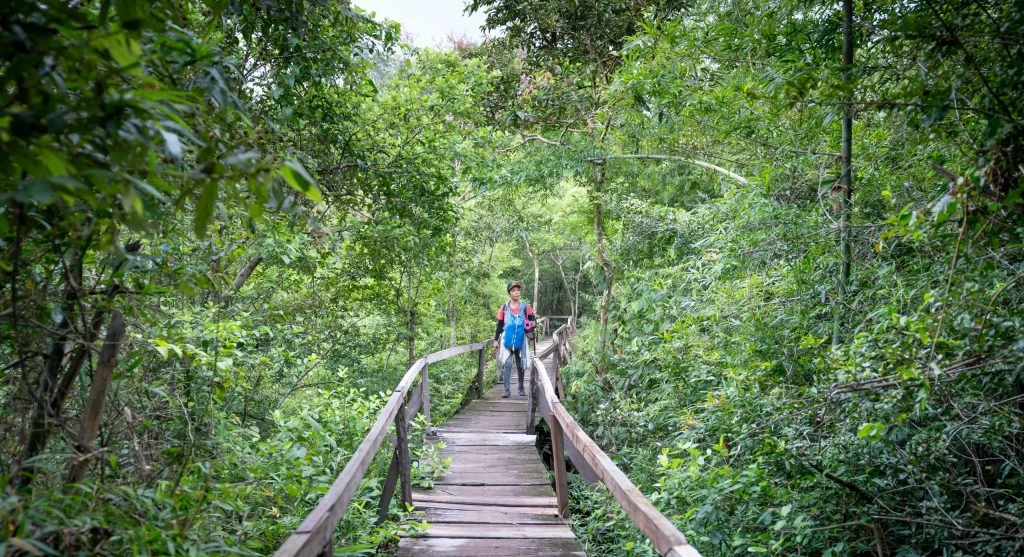
Credit: Amar Preciado / Pexels
Frequently Asked Questions
Q: Is trail distance enough to choose hiking shoes?
A: Not usually. Trail surface, elevation, weather, and stability needs often affect hiking shoe choice more than mileage by itself.
Q: Do hikers always need boots on rough trails?
A: Not always. Some hikers do well in lighter trail shoes, while others prefer more structure. Matching footwear to trail conditions depends on terrain, comfort, and how the shoe performs under real trail pressure.
Q: Why do short hikes sometimes hurt the feet?
A: A short route can still include rocky ground, steep descents, or slippery footing. Hiking footwear comfort depends on surface and movement, not only on hike length.
Q: What matters most in trail grip?
A: Trail grip matters most when the surface becomes loose, wet, or uneven. A shoe that feels stable in those conditions often improves confidence and balance throughout the route.