
Going down a steep trail certainly appears simpler than going up, yet lots of hikers find that coming down is equally exhausting. Your legs are constantly working while going downhill, you have to be more careful about keeping your balance, and going too fast almost always leads to trouble. What felt okay on the ascent can feel clumsy or wobbly on the way down when you start to lose how you’re doing it.
People who teach how to move in the outdoors say that how you go downhill isn’t so much about being quick as it is about being in charge. And, according to trail safety experts, you’re more likely to trip and fall going down if you don’t concentrate for long enough. Just a few small changes to how you do things can make walking down hills much more stable and not as tiring for the whole hike.
Why walking down steep trails often feels harder than expected
When you go down hills, each step almost forces your body to slow down. Your thighs, knees, calves, hips…all of them are engaged in handling how much you’re moving, and not just pushing you along. Because you are continually dealing with gravity on a steep slope, and not just following where the path goes, walking downhill can be surprisingly tiring.
Fitness experts point out this slowing-down, or braking, is what makes downhill walking different in how it wears you out from going up. Lots of hikers think they’ll feel better when the uphill section is finished, but then realize you need a different type of effort and focus to manage going down.
How shorter steps improve downhill hiking technique
To get better at hiking down hills, try taking smaller steps. When you step too far with each stride, you tend to lean forward and if the ground suddenly changes, it’s harder to get your balance back. Shorter steps, on the other hand, keep you more stably on the path and let you respond rapidly to loose rock, or a bumpy surface.
A lot of outdoor guides suggest concentrating on a nice beat or rhythm for your steps, and less on how far you’re stepping. Lots of small, careful steps will help you flow down the hill and stop the jarring impact of trying to stretch for a distant point on the downward slope.
Why posture matters when walking down steep trails
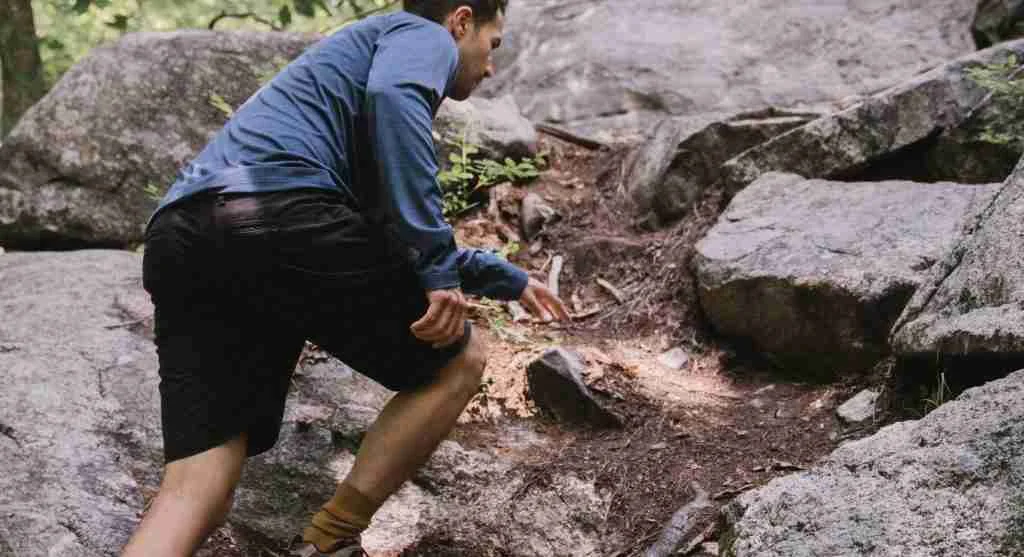
When going downhill, a lot of hikers find themselves falling backwards, as if to fight the hill. This can make you feel awkward and like you might fall. It’s generally more comfortable to go down steep paths by standing fairly straight and keeping your weight balanced over your feet, not by leaning way back.
Experts in how we move say that being balanced keeps your feet where they should be – right under you. Consequently, you can more easily adjust to stones, loose dirt, roots, or if the ground tips to one side without falling over. And with good balance, you’re less likely to thump down with each step.

Credit: Lum3n / Pexels
How foot placement supports steep trail footing
Foot placement becomes especially important on loose gravel, roots, wet leaves, and angled rock. Hikers often move more safely when they look just far enough ahead to choose the next stable landing area. Steep trail footing usually improves when each step is placed deliberately instead of reactively.
Outdoor safety trainers often note that the trail surface can change quickly within only a few steps. A solid patch of dirt may lead directly into loose stones or slick roots. Choosing the next landing point early helps the body stay ready for those changes.
Why speed often creates more fatigue on descents
Some hikers try to finish descents quickly because downhill seems like the easy part of the hike. In practice, rushing often increases fatigue because the legs have to absorb stronger impact with each step. Walking down steep trails at a controlled pace usually protects the body better than moving fast and trying to correct balance repeatedly.
Endurance coaches often explain that efficient downhill movement feels calm rather than dramatic. A slightly slower descent often saves energy because the body stays more stable and wastes less effort on hard braking.
How loose ground changes trail balance
Dust, pea gravel, dry needles, and leaf-covered dirt can all reduce traction. On these surfaces, trail balance depends even more on shorter steps and softer movement. Hikers often do better when they avoid sudden direction changes and keep weight centered through each step.
Outdoor educators often suggest treating loose ground like a surface that may shift under pressure, because it often does. That mindset usually encourages smoother and safer descent habits.
Why breaks can help before downhill fatigue builds too far
Long descents can quietly wear out the legs, especially after climbs that already used a lot of energy. A short pause before a major downhill section can help hikers reset posture, review footing, and let the legs settle before the controlled work begins. Walking down steep trails often becomes harder when hikers start the descent already tired.
Fitness specialists often recommend short breaks at logical transition points, such as ridge tops, overlooks, or before a clearly steeper section. The goal is not to stop constantly, but to begin technical downhill movement with enough control still available.
How hikers can improve downhill control over time
Downhill skill usually improves through repetition and awareness rather than through force. Hikers often learn by noticing which surfaces feel stable, when pace becomes too quick, and how the body reacts to different slopes. Walking down steep trails becomes easier when hikers treat descents as a trail skill worth practicing instead of just the part that comes after the climb.
Outdoor coaches often suggest reviewing what felt difficult after each hike. That may include fast sections, loose surfaces, or moments when the legs became shaky. These observations often help hikers build stronger downhill habits on future trails.
Frequently Asked Questions
Q: Why do descents make legs feel shaky?
A: Descents require constant control with each step, especially on steep or uneven ground. The muscles work continuously to slow the body down, which can create fatigue quickly.
Q: Should hikers lean back on steep downhills?
A: Usually no. Staying more upright and centered often improves trail balance better than leaning sharply back, which can make footing less stable.
Q: Are shorter steps really better on descents?
A: Yes, in many cases. Shorter steps usually make it easier to react to shifting surfaces and reduce the impact that comes from reaching too far downhill.
Q: What type of surface is hardest on steep descents?
A: Loose gravel, dry dust, wet leaves, and root-covered sections often challenge steep trail footing the most because they reduce traction and predictability.
Key Takeaway
Walking down steep trails becomes easier when hikers focus on control instead of speed. Shorter steps, centered posture, careful foot placement, and steady downhill hiking technique usually improve both balance and comfort. Over time, stronger trail balance often turns steep descents into a more manageable part of the hike.