

Outdoor educators often explain that trail effort is shaped by repetition as much as by size. A route does not need one dramatic obstacle to feel tiring. It only needs enough small interruptions to stop walking from staying smooth. This is why hikers often feel more tired on trails with repeated shallow step-ups. The body keeps paying extra for lifting, resetting stride, and rebuilding rhythm without enough easy ground between those moments.
Why shallow step-ups feel bigger than they look
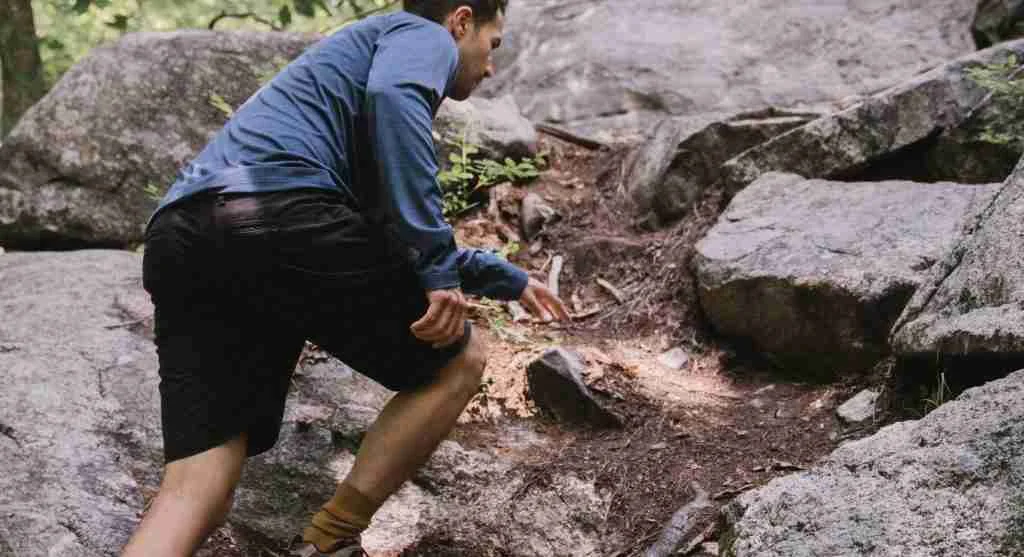
One reason shallow step-ups feel surprisingly tiring is that hikers rarely treat them as a real challenge early on. A low root edge or small rock rise seems too minor to matter much. Yet the body still has to lift weight over it, land again, and continue forward. When that happens every few steps, the trail quietly stops behaving like ordinary walking.
Outdoor instructors often explain that hikers usually respect big elevation changes more than small repeated ones. That often leads to underestimating the total cost of a trail that climbs in many tiny pieces rather than in one obvious section.
How repeated lifting changes trail effort
Repeated lifting is one of the main reasons these routes feel more tiring than they appear. On smoother tread, the body can move forward with a more natural rolling motion. On trails with shallow step-ups, the forward motion keeps becoming upward motion for just a moment, then returning to level again. That small repeated change often makes the legs work harder than the trail’s overall grade suggests.
Movement specialists often note that hikers feel this most in the calves, thighs, and hips. The body is not handling one big climb. It is handling hundreds of tiny lifts that slowly take more effort than expected.
Why hiking rhythm breaks on these trails
Walking rhythm usually helps the body save energy. Once stride and breathing settle into a pattern, movement often feels easier. Shallow step-ups interrupt that pattern. The feet cannot simply repeat the same motion step after step. Instead, the body keeps adjusting for another small lift, another awkward landing, and another shift in stride length.
Outdoor coaches often explain that hikers often notice this later as a general heaviness. The trail may not feel steep, but it no longer feels smooth. That loss of rhythm often explains why the route feels more tiring than the map suggested.

How small step-ups tire flat or mild trails too
These features often surprise hikers most on trails that otherwise look flat or only gently rolling. A route may seem moderate because it lacks a long climb, yet the body still feels tired later on. That is because the trail’s difficulty is hidden inside surface shape rather than overall elevation. A moderate path with many shallow step-ups may feel more tiring than a smoother route with slightly more steady grade.
Trail planners often explain that trail structure matters as much as total gain. Repeated vertical interruptions often cost more than hikers expect when they are spread across a long stretch.
Why these trails feel slower too
Shallow step-up trails often feel slower because each small rise slightly interrupts stride length and pace. Hikers may not stop, but the body usually gives up a little speed every time it has to step up and reset. Over time, that often lowers average pace more than expected, especially when the trail combines small rises with rocks, roots, or narrow tread.
Fitness specialists often note that this is why some moderate trails take longer than they look like they should. The route keeps taking small pieces of time rather than one obvious block of time.
How step-up patterns make later fatigue worse
Later in the hike, repeated shallow step-ups often feel much more tiring because the body no longer has the same extra reserve. Early on, each little lift seems manageable. Later, the same trail begins feeling annoyingly heavy because the legs have already spent a long time doing repeated small climbs without enough full relief between them.
Outdoor educators often explain that late fatigue often reveals what the trail was quietly charging all along. The route may not have changed. The hiker simply has less extra strength left to hide the cost.
Why these trails can frustrate hikers mentally
Trails with many shallow step-ups often feel mentally frustrating because the difficulty never looks important enough to justify the tiredness. A hiker may wonder why the route feels so draining when there was no major climb to blame. This mismatch between appearance and effort often makes the trail feel more annoying than a harder-looking route that was honest from the start.
Outdoor psychologists often note that people usually handle effort better when the reason feels clear. Repeated shallow step-ups often hide the reason too well, which makes the fatigue feel strangely unfair until the pattern becomes obvious.
How surface conditions make shallow rises even harder
Dust, mud, slick roots, or loose rock often make these small rises more tiring because the body must not only lift but also control the landing afterward. A dry firm step-up is one thing. A soft, dusty, or slightly slippery one asks for extra balance and more careful foot placement, which often increases the cost of every little rise.
Outdoor guides often explain that small trail features become much more expensive when traction and confidence are reduced. The rise may still be shallow, but the body experiences it as more demanding because the step never feels fully clean.
How hikers can move better on these trails
The most useful adjustment is usually simple. Hikers often do better when they stop treating each shallow rise as unimportant and instead recognize the repeated pattern as the real challenge. Shorter steady steps, calmer pacing, and less rushing between rises often help the body conserve more energy. It also helps to avoid speeding up too much on the brief flatter sections between them.
Outdoor coaches often recommend pacing these trails as if the repeated small lifts are one continuous feature. Once hikers do that, the route usually feels more logical and less frustrating.
Why understanding this improves trail planning
Many hikers plan around miles and major elevation changes while giving less attention to how often a trail rises in smaller pieces. Trails with repeated shallow step-ups often deserve more respect than they first appear to deserve. Once hikers understand that, their timing, pacing, and energy expectations usually become much more realistic.
Outdoor educators often explain that the most tiring trail features are not always the biggest ones. Sometimes the hardest pattern is the one that keeps returning in small ways for mile after mile. Shallow step-ups are a strong example of that kind of hidden trail effort.

Frequently Asked Questions
Q: Why do shallow step-ups make hikers tired if they are so small?
A: Because each one still requires lifting, resetting stride, and landing again, and those small costs add up over the full route.
Q: Are repeated shallow step-ups worse than one steady climb?
A: Sometimes yes, because they keep breaking rhythm and hiding effort inside many small interruptions instead of one obvious uphill section.
Q: Do these trails slow hikers down too?
A: Yes. Repeated small rises often reduce average pace by interrupting stride and making the body rebuild momentum again and again.
Q: What helps most on trails with many shallow step-ups?
A: Many hikers do better with shorter steady steps, calmer overall pacing, and realistic respect for the repeated lifting pattern.
Key Takeaway
Hikers often feel more tired on trails with repeated shallow step-ups because small rises quietly drain energy through constant lifting, broken rhythm, and repeated pace resets. The trail may never look dramatic, but the body keeps paying for every little interruption. When hikers recognize that pattern early, these routes become much easier to understand and pace well.