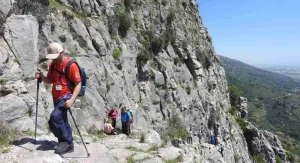


Outdoor educators often explain that uphill effort becomes much more tiring when the body cannot stay in one usable pattern. Movement specialists also note that hikers often feel more worn out on stop-and-start uphill trails because each restart raises effort again instead of letting the body climb smoothly through one continuous rhythm. This is why some moderate uphill routes feel more draining than steeper trails that simply keep moving in one consistent way.
Why stop-and-start climbing feels so tiring
One reason stop-and-start climbing feels tiring is that the body usually does best when it can settle into one pace and keep it. On a steady climb, hikers often shorten stride, match breathing to effort, and slowly find a rhythm they can maintain. On a stop-and-start uphill trail, that rhythm keeps getting interrupted before it fully helps.
Outdoor instructors often explain that interruptions make the climb feel more expensive because the body must repeatedly rebuild momentum. Even short resets can make the hill feel bigger than it really is once they happen often enough.
How repeated restarts raise uphill effort
Repeated restarts often cost more than hikers expect. When the body is already climbing, each new push into uphill movement asks for energy. If the trail interrupts that motion with short pauses, awkward steps, or sudden slower sections, the next push upward usually feels heavier than continuing the same climb would have felt.
Fitness specialists often note that hikers rarely feel this as one dramatic problem. Instead, they notice the climb becoming more tiring than it seems like it should be. The hidden reason is often the repeated restart pattern rather than the steepness alone.
Why rhythm matters so much on uphill trails
Uphill rhythm often protects hikers from feeling overwhelmed too early. Once breathing, stride, and effort begin working together, the body can handle climbing more honestly. Stop-and-start uphill trails weaken that advantage. Just as rhythm begins to settle, the trail interrupts it with a feature that forces a change in timing or posture.
Outdoor coaches often explain that this is why some climbs feel mentally frustrating as well as physically tiring. The body keeps trying to organize the effort, and the trail keeps refusing to stay consistent long enough for that effort to become efficient.
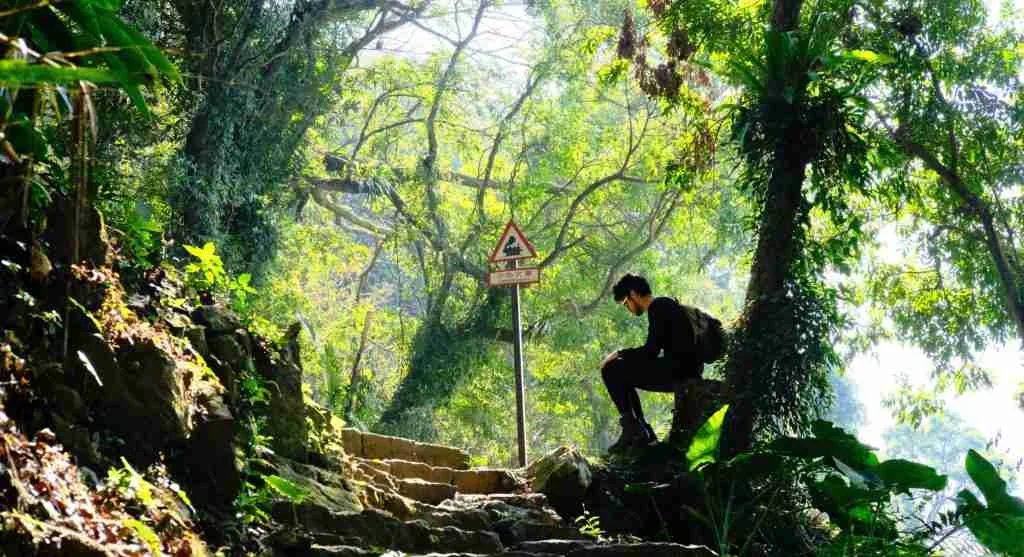
How small obstacles make uphill sections feel bigger
On uphill routes, even small obstacles can feel more significant because the body is already working against gravity. A root, rock lip, narrow corner, or awkward step-up may not seem like much on flatter ground. On a climb, those same features often act like little interruptions that demand extra concentration and extra effort all at once.
Movement specialists often explain that uphill obstacles are tiring not only because of what they are, but because of when they appear. The body is already paying for the climb, so each added disruption feels more expensive than it would on easier terrain.
Why hikers often pace these climbs badly
Stop-and-start uphill trails often lead to pace mistakes because hikers treat each restart as a chance to regain lost ground quickly. After a brief pause or awkward section, many people push a little too hard to feel back in control. That works for a moment, but it often makes the next interruption feel even heavier. The trail then turns into a cycle of effort spikes instead of one sustainable climb.
Outdoor guides often explain that these routes usually respond better to steadiness than to recovery surges. The more hikers try to erase each interruption with stronger effort, the more worn out the climb often feels later.
How breathing gets disrupted on broken uphill sections
Breathing often tells the story of these climbs clearly. On a steady uphill, the body usually finds a pattern that feels hard but manageable. On stop-and-start trails, breathing may settle, then rise sharply again, then settle, then rise once more. That pattern often feels more tiring than one continuous level of uphill effort, even if the route is not extremely steep overall.
Fitness educators often note that the body usually prefers predictable effort. Broken uphill sections reduce that predictability, so the hike often feels harder than the grade alone would suggest.
Why these trails often feel worse later in the climb
Early on, hikers often handle repeated uphill interruptions fairly well. Later, the same pattern becomes much more tiring. Each restart feels heavier, the body becomes less patient with awkward steps, and the trail begins seeming bigger than it looked from below. The route may not have changed at all, but the body now has less extra energy to smooth over each disruption.
Outdoor educators often explain that this is why broken climbs often feel unfair near the top. The trail is still following the same pattern it started with. The hiker is simply meeting that pattern with less reserve than before.
How weather can make stop-and-start climbs harder
Warm air, direct sun, humidity, or exposed wind can all make interrupted climbing feel even more tiring. A short pause on a hot uphill often does not feel like true recovery. The body may stop moving without fully regaining comfort, then has to push uphill again under the same conditions. This makes the restarts feel even less rewarding and often more frustrating.
Weather educators often explain that stop-and-start uphill trails are especially tiring when the environment makes breaks less restorative than hikers hoped they would be.
How hikers can climb these trails more effectively
The most useful adjustment is usually simple. Hikers often do better when they treat the whole broken climb as one long challenge instead of as many separate little ones. That means calmer pacing after interruptions, shorter steps, and less urge to make up time every time the trail briefly slows them down.
Outdoor coaches often recommend protecting rhythm wherever possible, even if the rhythm is slower than expected. Once hikers accept the trail’s broken pattern instead of fighting it, the climb often begins feeling more manageable.
Why understanding this improves route planning
Many hikers judge uphill trails mainly by elevation gain and total distance. Stop-and-start structure deserves attention too. A climb with repeated interruptions can feel more wearing than a smoother uphill with similar numbers. Once hikers understand that, their pace choices become better and their expectations become more realistic.
Outdoor educators often explain that strong trail planning depends on how the route climbs, not only how much it climbs. Stop-and-start uphill trails often prove that point very clearly.

Frequently Asked Questions
Q: Why do stop-and-start uphill trails feel more tiring than steady climbs?
A: Because repeated interruptions keep breaking climbing rhythm and force the body to restart effort again and again.
Q: Are small uphill interruptions really that important?
A: Yes. On a climb, even short awkward sections can feel more expensive because the body is already working hard against gravity.
Q: Why do these trails often feel worse near the top?
A: The body has less reserve later, so each restart feels heavier and each interruption becomes more tiring than it did early in the climb.
Q: What helps most on a stop-and-start uphill trail?
A: Many hikers do better with calmer pacing, shorter steps, and less effort to “make up” time after each interruption.
Key Takeaway
Hikers often feel more worn out on stop-and-start uphill trails because repeated restarts quietly make climbing less efficient than a steady ascent. The route may not look extreme, but broken rhythm, extra control, and repeated effort spikes add up quickly. When hikers pace for the full pattern instead of each small section, these climbs usually feel much more manageable.