

Loose gravel on hiking trails can make an easy route suddenly feel awkward, tiring, and less secure. A section that looks simple from a distance may become frustrating once the feet begin sliding slightly under pressure. Many hikers lose confidence on this kind of surface not because it is extreme, but because it changes how every step feels.
Outdoor movement educators often explain that gravel becomes easier when hikers stop trying to walk on it like firm dirt. Trail safety specialists also note that small changes in step length, posture, and pace often matter more than strength alone. With the right approach, loose gravel on hiking trails usually feels much more manageable than it first seems.
Why loose gravel on hiking trails feels harder than it looks
Loose gravel often looks flat and harmless, yet it changes how the foot lands and pushes off. Firm dirt supports a steady stride, but gravel may roll, shift, or slide under pressure. That means the body has to keep adjusting balance with almost every step.
Outdoor instructors often explain that the challenge comes from unpredictability. A hiker may place one foot and feel solid, then place the next on a section that moves slightly. That uneven response is what makes loose gravel on hiking trails feel more tiring than smoother ground of the same distance.
How to slow down before the gravel starts causing slips
The best time to adjust is usually before the feet start sliding. Once hikers notice the surface turning looser, smaller and calmer movement often helps immediately. A short slowdown gives the body time to read the new ground instead of reacting late to it.
Trail coaches often explain that many slips happen because hikers keep the same pace they used on firmer trail. Gravel often asks for a different rhythm. Slowing slightly before the unstable section begins usually improves control much more than waiting for a stumble to force the change.
Why shorter steps improve hiking footing control
Shorter steps often make gravel easier because they keep the body more centered over each foot. Long steps place more trust in the landing spot and create more force when the ground shifts. Smaller steps reduce that force and make it easier to recover if the surface moves.
Movement specialists often note that this is one of the simplest ways to improve hiking footing control. Hikers do not need dramatic technique changes. They usually just need to shorten stride enough that each step feels easier to correct.
Credit: Mirsad Mujanovic/ Pexels
How to keep posture centered while walking on loose ground
Posture matters because gravel punishes overreaching. If a hiker leans too far forward or lets the body get ahead of the feet, each sliding step feels larger and harder to control. Walking on loose ground often becomes easier when the torso stays more centered and relaxed over the legs.
Outdoor educators often explain that centered posture helps the feet respond faster. The body does not need to fight as hard to recover when a small slide happens. That usually turns the movement into a correction rather than a larger loss of confidence.
Why loose gravel feels more difficult on descents
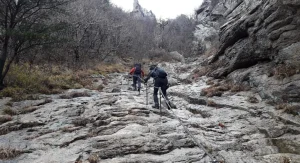
Gravel often becomes more challenging on the way down because the body is already trying to control speed. Each step adds braking force, and the surface may move at the same time. Loose gravel on hiking trails therefore tends to feel much more demanding on descents than on flatter stretches.
Trail safety specialists often recommend extra patience here. A calm downhill pace with short steps usually protects both balance and leg energy better than trying to get through the section quickly. Faster movement often creates larger slides and harder landings.
How to choose better foot placements on gravel
Not every gravel section behaves the same way. Some parts are deeply loose, while others have firmer spots mixed between them. Hikers often do better when they look for slightly more stable lines, such as edges with packed soil, flatter stones, or sections where gravel appears less deep.
Outdoor instructors often explain that good trail balance skills often begin with reading the surface a few steps ahead. The goal is not to stare only at the toes. It is to notice where the next stable-looking landing points are likely to be before stepping into the loosest part of the tread.
Why tension makes the surface feel worse
Many hikers tense up once gravel starts sliding. That reaction is understandable, but it often makes movement less smooth. Tight shoulders, stiff legs, and hurried correction can turn a small surface problem into a bigger one. Loose gravel on hiking trails often feels easier when hikers stay calm enough to let the body make smaller adjustments.
Movement educators often explain that relaxed control is more useful than rigid caution. A small amount of movement in the gravel is often normal. Trying to eliminate every shift completely can waste energy and make the trail feel more stressful than it needs to feel.
How to protect energy on longer gravel sections
Long gravel stretches often drain energy because the body never quite gets a full rhythm. Small corrections, slower movement, and careful foot placement all add effort over time. Hikers often manage these sections better when they accept the slower pace early instead of fighting it.
Fitness specialists often note that energy is often saved by giving up the idea of moving normally on abnormal ground. A measured pace, shorter stride, and better line choice usually preserve more energy than pushing through and forcing repeated recovery steps.
How to build confidence without overthinking every step
Confidence on gravel usually grows from a few useful habits repeated calmly. Hikers often do well when they shorten steps, look slightly ahead, stay centered, and allow the body to adapt. These habits often make the surface feel more readable after only a short distance.
Outdoor coaches often explain that loose gravel on hiking trails becomes less intimidating once hikers stop treating every shift as failure. Small surface movement is part of the terrain. The real skill is staying balanced and efficient while it happens.
Credit: Pixabay / Pexels
Frequently Asked Questions
Q: Why does loose gravel feel so unstable on trails?
A: Gravel shifts under pressure, so each step may respond differently. That makes balance and push-off less predictable than on firm dirt.
Q: Should hikers take bigger or smaller steps on gravel?
A: Smaller steps usually work better. They keep the body more centered and make it easier to recover if the surface slides slightly.
Q: Why is gravel harder on descents?
A: Descents add braking force to every step. When the surface is already loose, controlling speed and balance becomes more demanding.
Q: What helps most on long gravel sections?
A: A calmer pace, shorter stride, better line choice, and steady posture often help the most. These small adjustments usually improve both comfort and control.
Key Takeaway
Loose gravel on hiking trails often feels difficult because it changes footing, balance, and pace all at once. Hikers usually manage it better when they slow slightly, shorten steps, stay centered, and look for more stable lines through the section. In many cases, confidence returns quickly once the surface is treated as a skill problem instead of a speed problem.